Analyzing multivariable relationships + Reproducibility
Jan 14, 2025
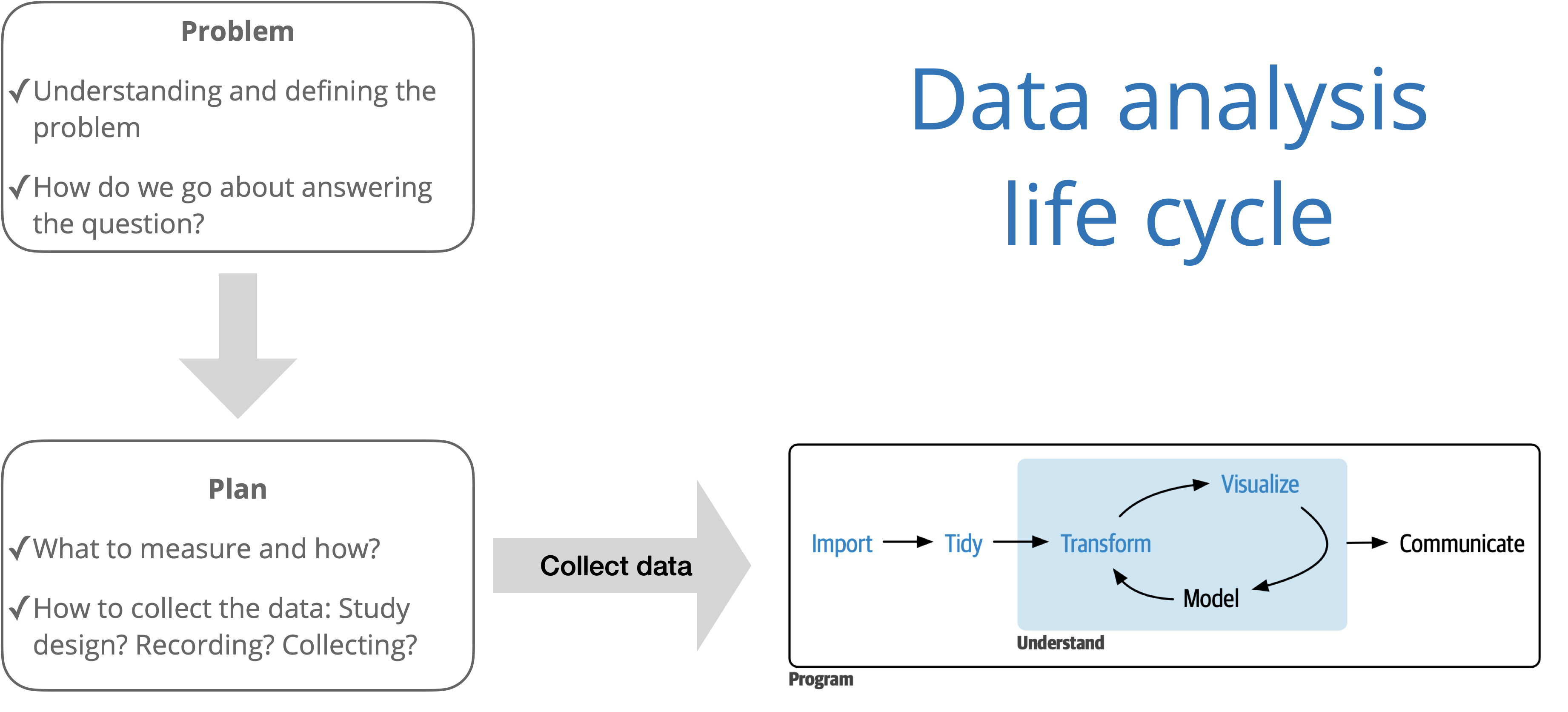
Source: R for Data Science with additions from The Art of Statistics: How to Learn from Data.
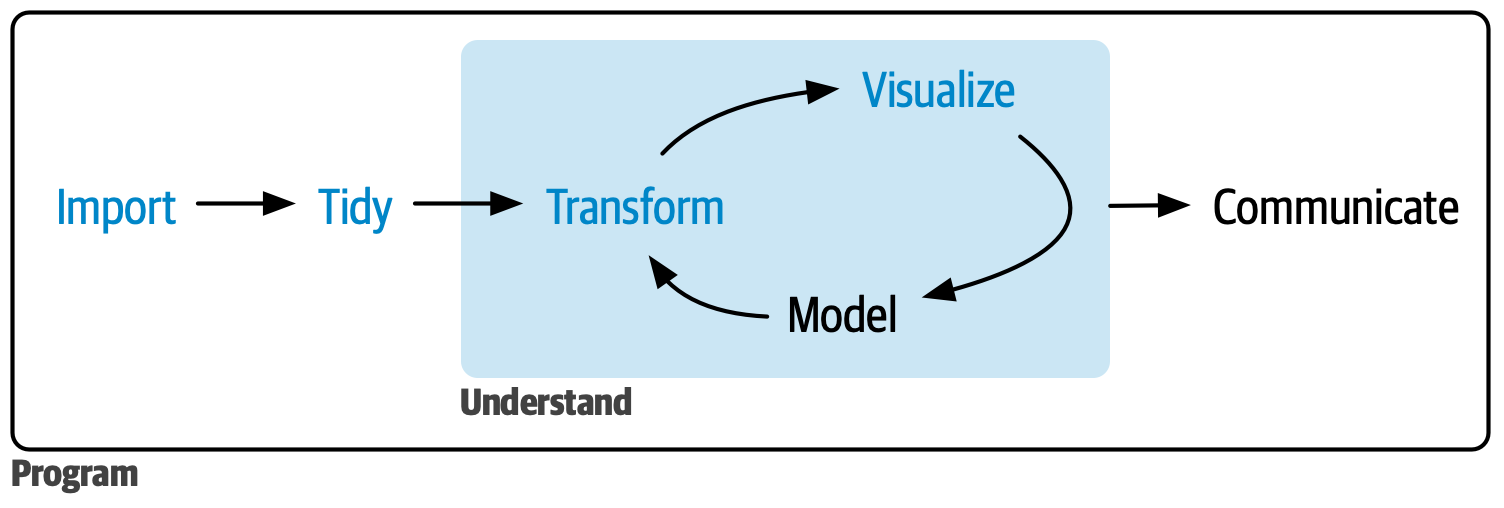
Source:R for Data Science
What does it mean for an analysis to be reproducible?
Near term goals:
✔️ Can the tables and figures be exactly reproduced from the code and data?
✔️ Does the code actually do what you think it does?
✔️ In addition to what was done, is it clear why it was done?
Long term goals:
✔️ Can the code be used for other data?
✔️ Can you extend the code to do other things?
Results produced are more reliable and trustworthy (Ostblom and Timbers 2022)
Facilitates more effective collaboration (Ostblom and Timbers 2022)
Contributing to science, which builds and organizes knowledge in terms of testable hypotheses (Alexander 2023)
Possible to identify and correct errors or biases in the analysis process (Alexander 2023)

Originally reported “the intervention, compared with usual care, resulted in a fewer number of mean COPD-related hospitalizations and emergency department visits at 6 months per participant.”
There were actually more COPD-related hospitalizations and emergency department visits in the intervention group compared to the control group
Mixed up the intervention vs. control group using “0/1” coding
Scriptability \(\rightarrow\) R
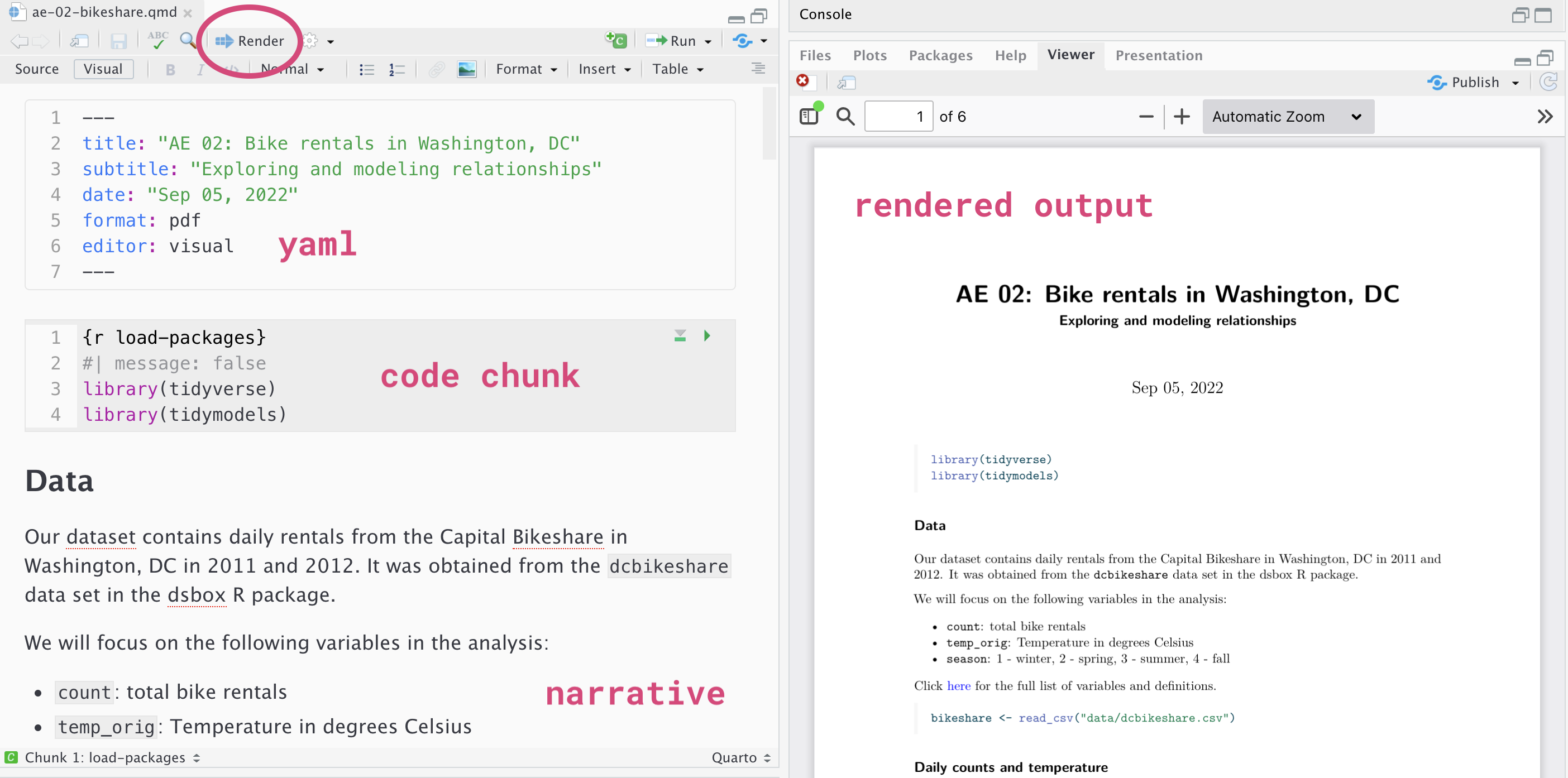
Literate programming (code, narrative, output in one place) \(\rightarrow\) Quarto
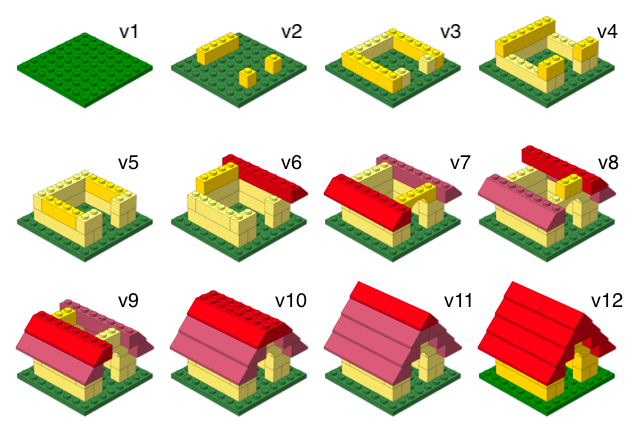
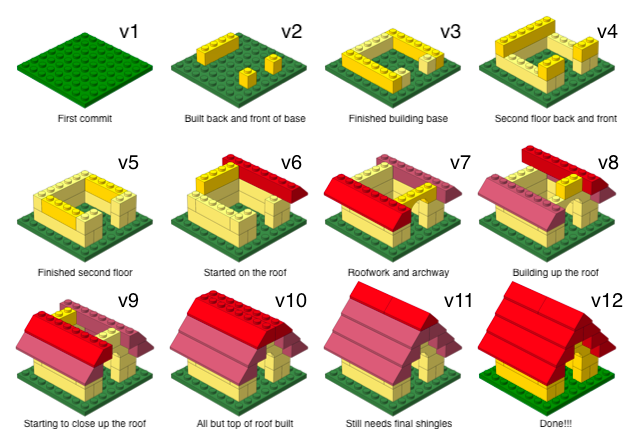
Version control \(\rightarrow\) Git / GitHub
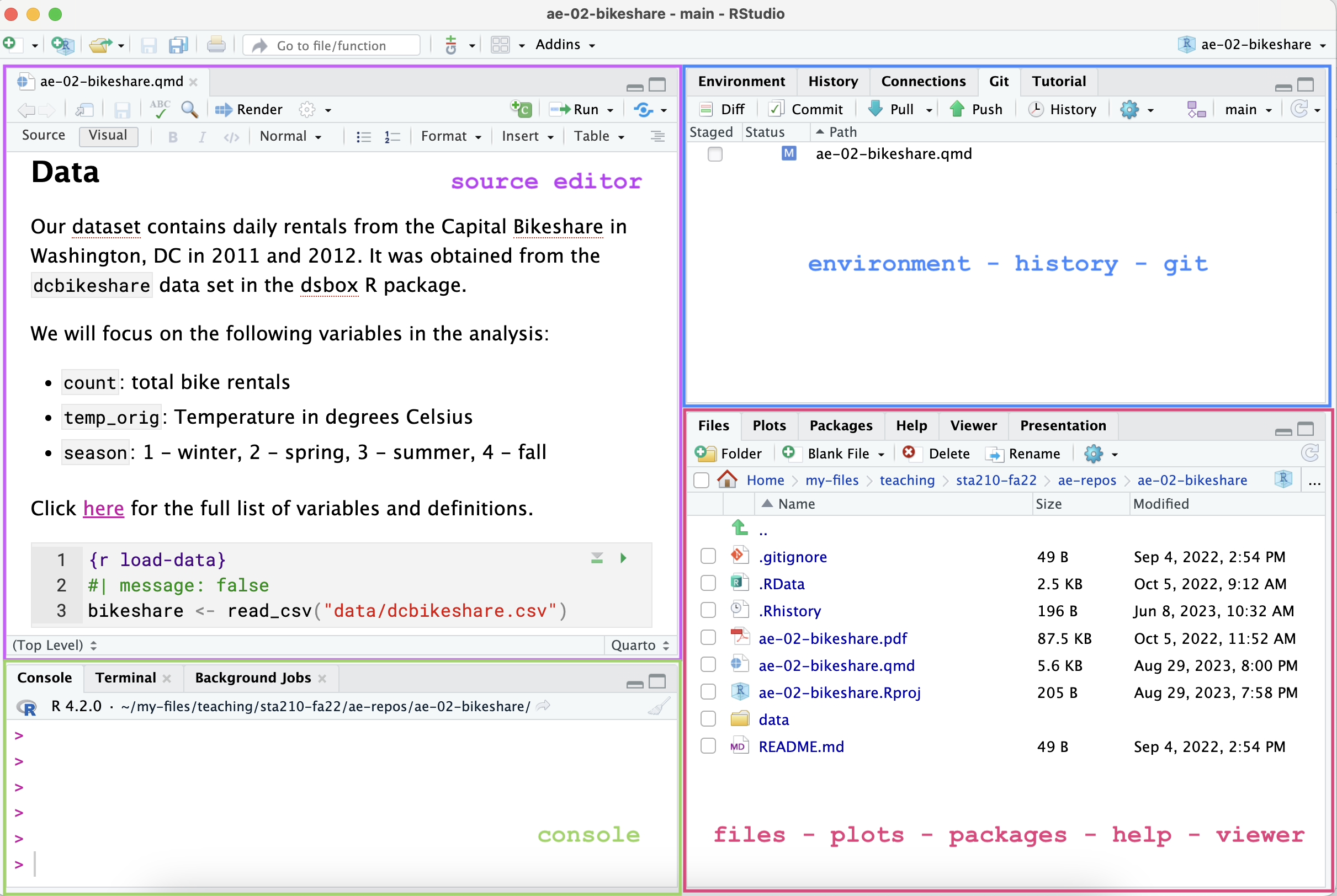
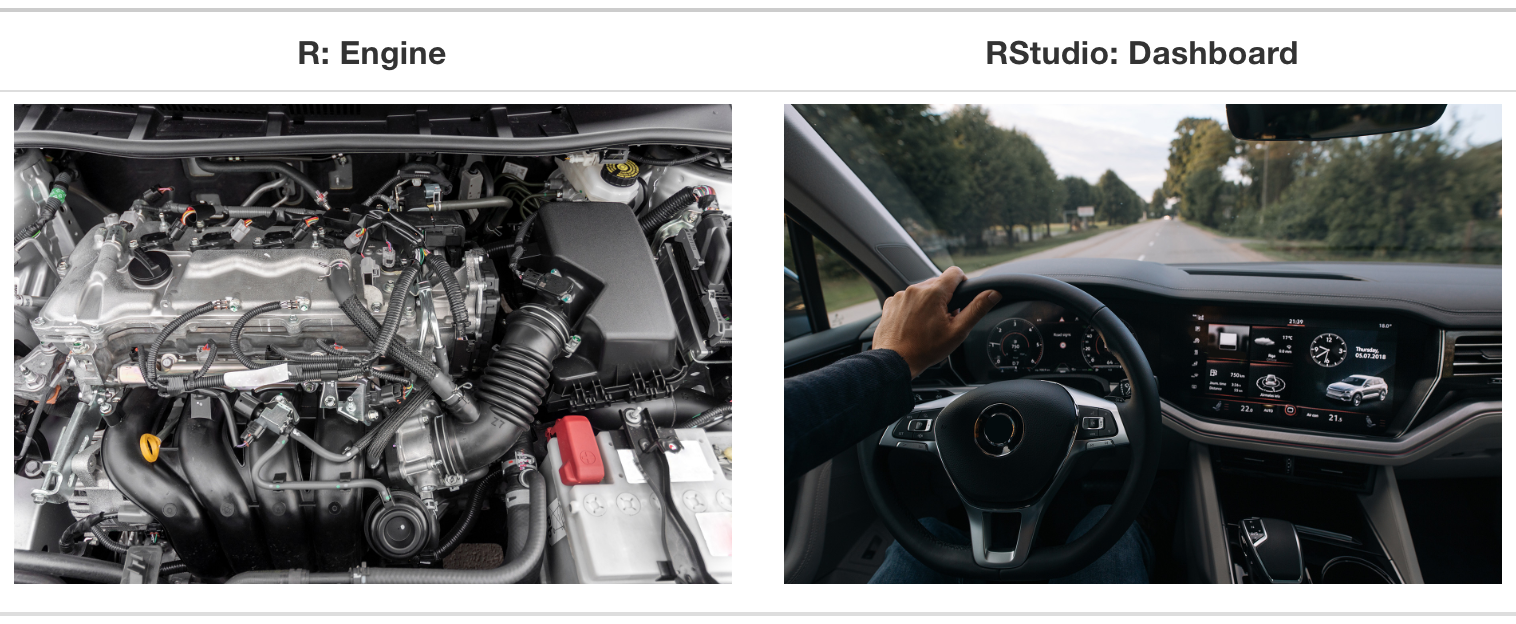
R is a statistical programming language
RStudio is a convenient interface for R (an integrated development environment, IDE)
Fully reproducible reports – the analysis is run from the beginning each time you render
Code goes in chunks and narrative goes outside of chunks
Visual editor to make document editing experience similar to a word processor (Google docs, Word, Pages, etc.)
Every application exercise and assignment is written in a Quarto document
You’ll have a template Quarto document to start with
The amount of scaffolding in the template will decrease over the semester
with human readable messages

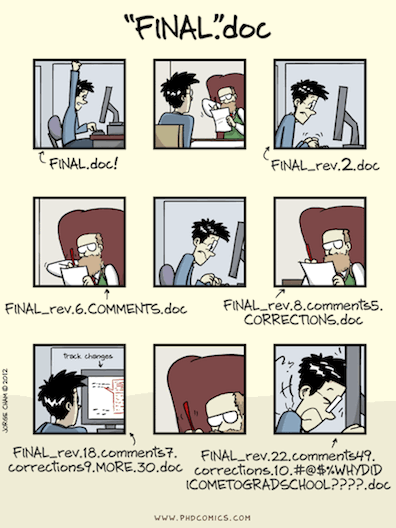
Provides a clear record of how the analysis methods evolved. This makes analysis auditable and thus more trustworthy and reliable. (Ostblom and Timbers 2022)
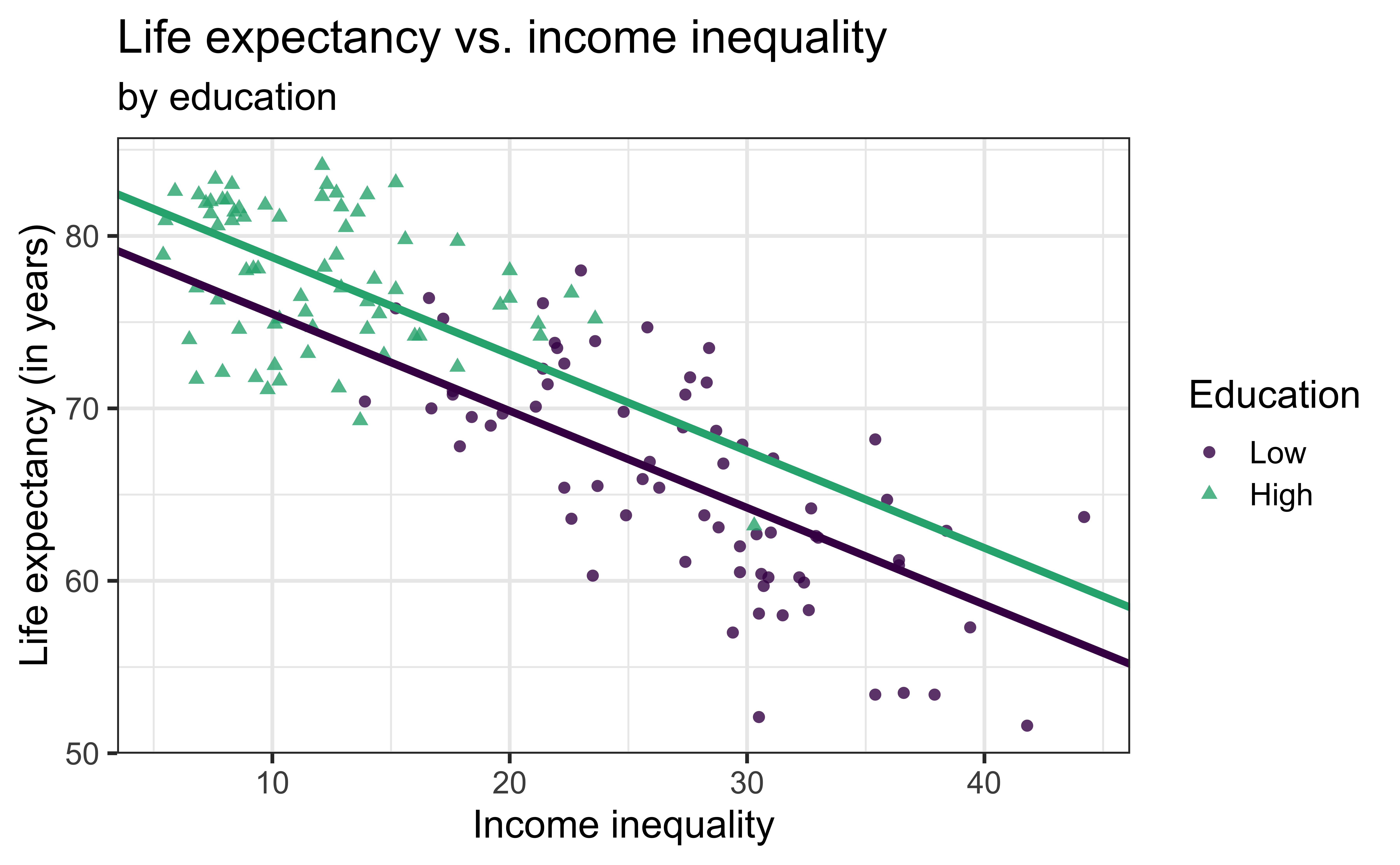
The data set comes from Zarulli et al. (2021) who analyze the effects of a country’s healthcare expenditures and other factors on the country’s life expectancy. The data are originally from the Human Development Database and World Health Organization.
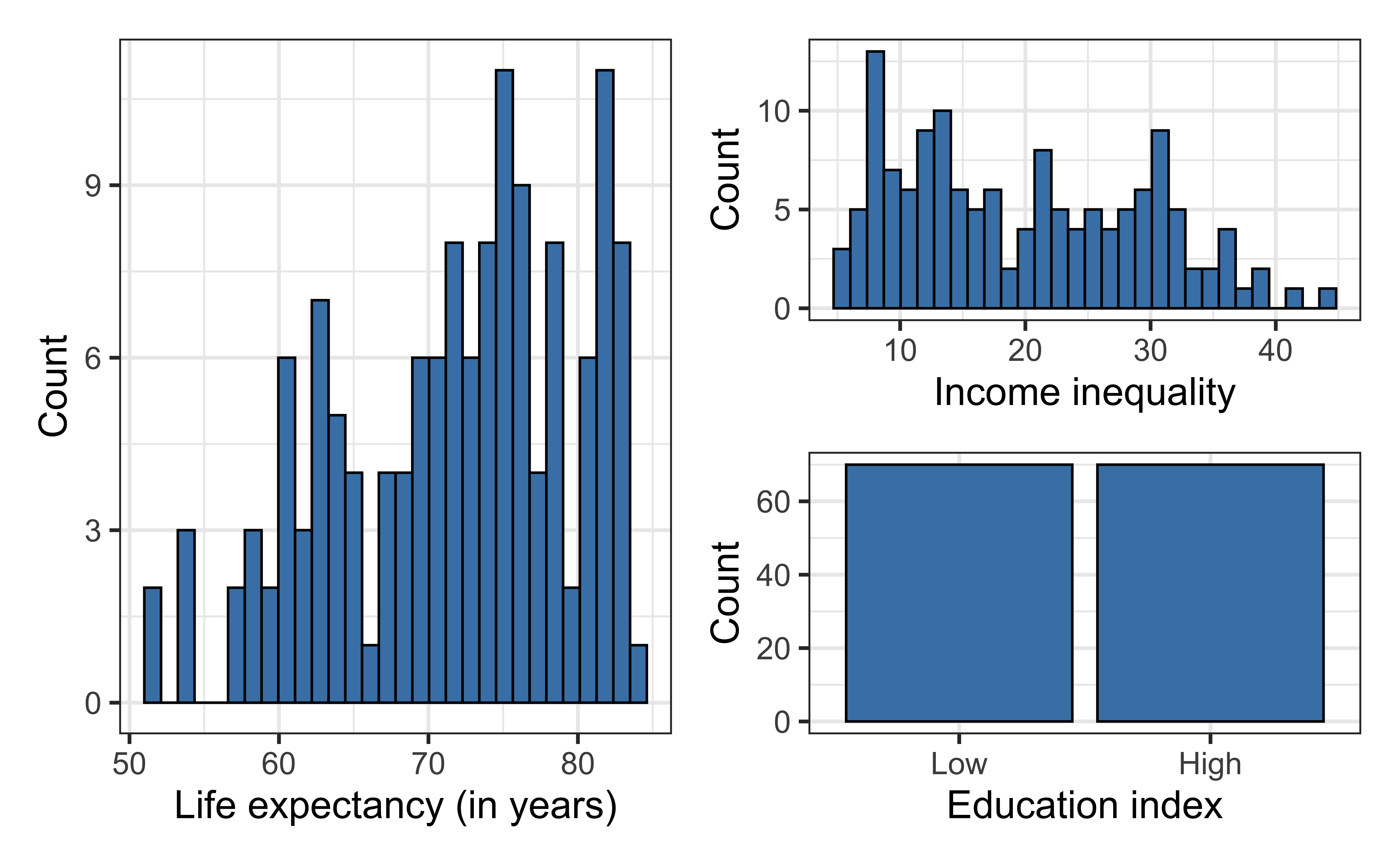
There are 140 countries (observations) in the data set.
life_exp: The average number of years that a newborn could expect to live, if he or she were to pass through life exposed to the sex- and age-specific death rates prevailing at the time of his or her birth, for a specific year, in a given country, territory, or geographic area. ( from the World Health Organization)
income_inequality: Measure of the deviation of the distribution of income among individuals or households within a country from a perfectly equal distribution. A value of 0 represents absolute equality, a value of 100 absolute inequality (Gini coefficient).
education: Indicator of whether a country’s education index is above (High) or below (Low) the median index for the 140 countries in the data set.
life_exp is the response variable
income_inequality, education are the predictor variables
\[\text{life_exp} = f(\text{income_inequality}, \text{education}) + \epsilon\]
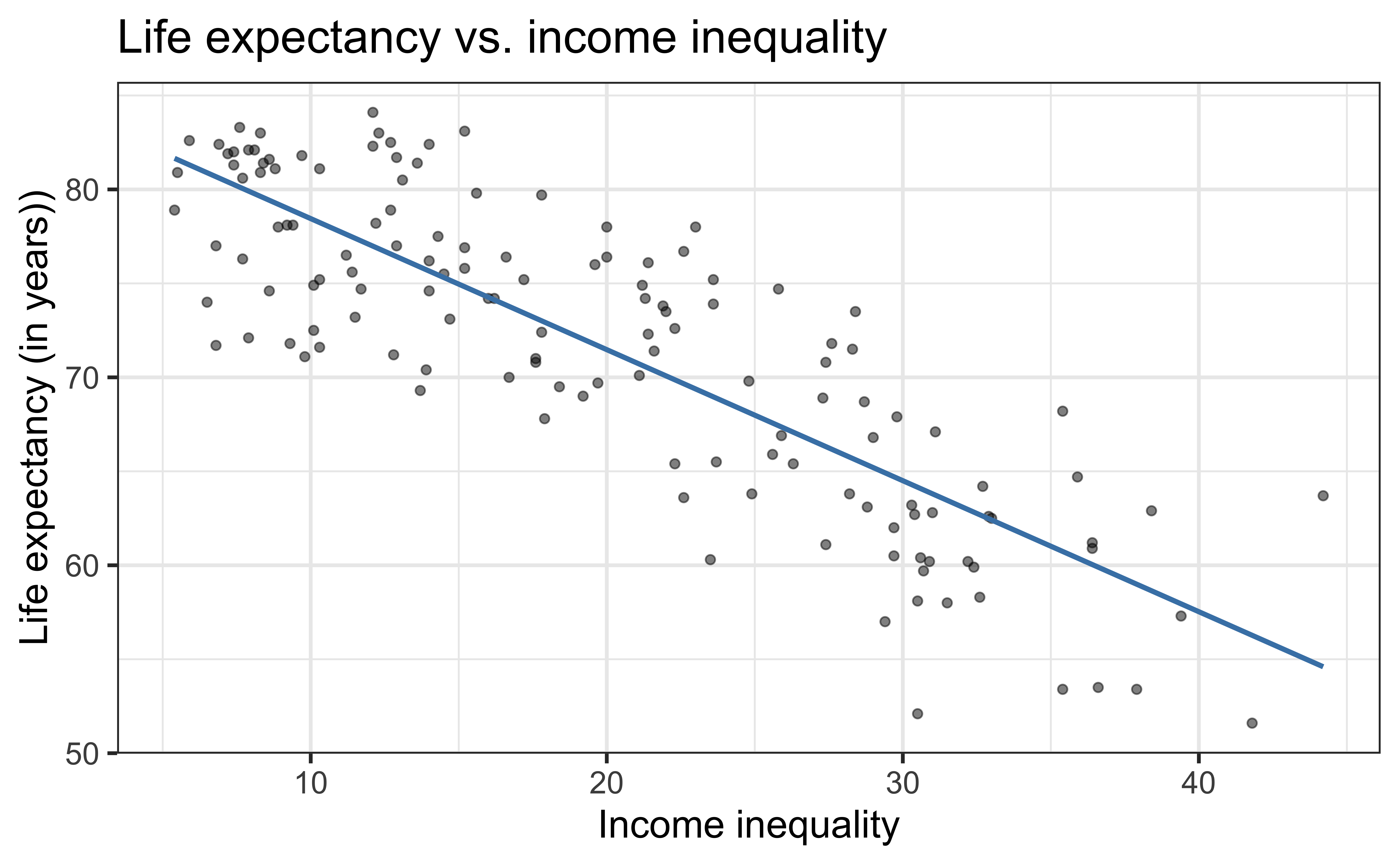
life_exp vs. income_inequality\[\widehat{\text{life_exp}} = \hat{\beta}_0 + \hat{\beta}_1 ~\text{income_inequality}\]
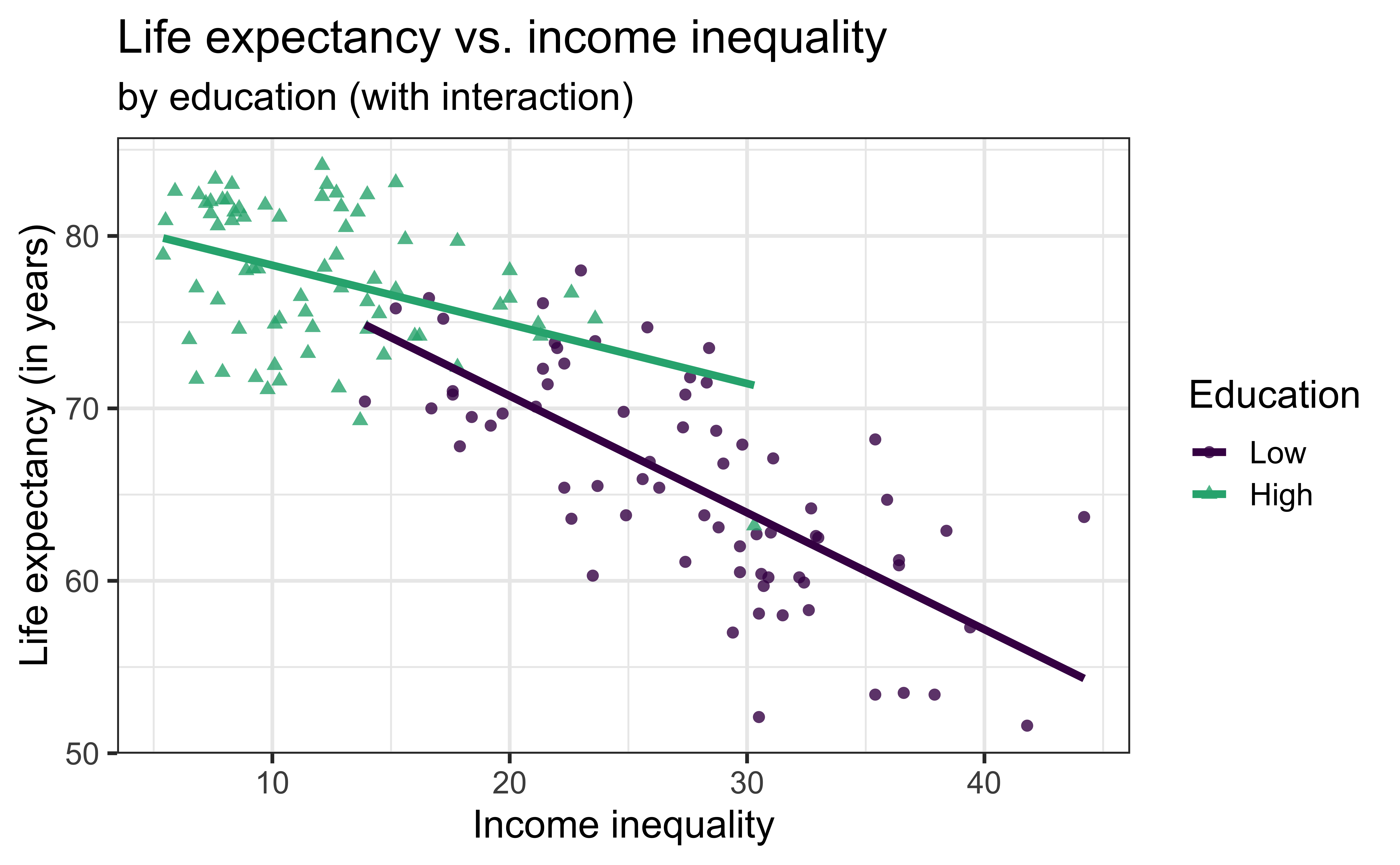
life_exp vs. income_inequality + education\[\widehat{\text{life_exp}} = \hat{\beta}_0 + \hat{\beta}_1 ~\text{income_inequality} + \hat{\beta}_2 ~\text{education}\]
Statistical model (also known as the data-generating model)
\[{\small \text{life_exp} = \beta_0 + \beta_1 ~\text{income_inequality} + \beta_2 ~\text{education} + \epsilon}\]
Models the process for generating values of the response in the population (function + error), i.e., the population-level model.
Regression equation (also known as the fitted model)
Estimate of the function using the sample data
\[{\small \widehat{\text{life_exp}} = \hat{\beta}_0 + \hat{\beta}_1 ~\text{income_inequality} + \hat{\beta}_2 ~\text{education}}\]
life_exp vs. income_inequality + education (with interaction)\[{\small \widehat{\text{life_exp}} = \hat{\beta}_0 + \hat{\beta}_1 ~\text{income_inequality} + \hat{\beta}_2 ~\text{education} + \hat{\beta}_3 ~ \text{income_inequality} \times \text{education}}\]
Prediction: Expected value of the response variable for given values of the predictor variables
Inference: Conclusion about the relationship between the response and predictor variables
What is an example of a prediction question that can be answered using the model of life_exp vs. income_inequality and education?
What is an example of an inference question that can be answered using the model of life_exp vs.income_inequality and education?
Reproducibility
It is best practice conduct all data analysis in a reproducible way
We will implement a reproducible workflow using R, Quarto, and git/GitHub
Multivariable relationships
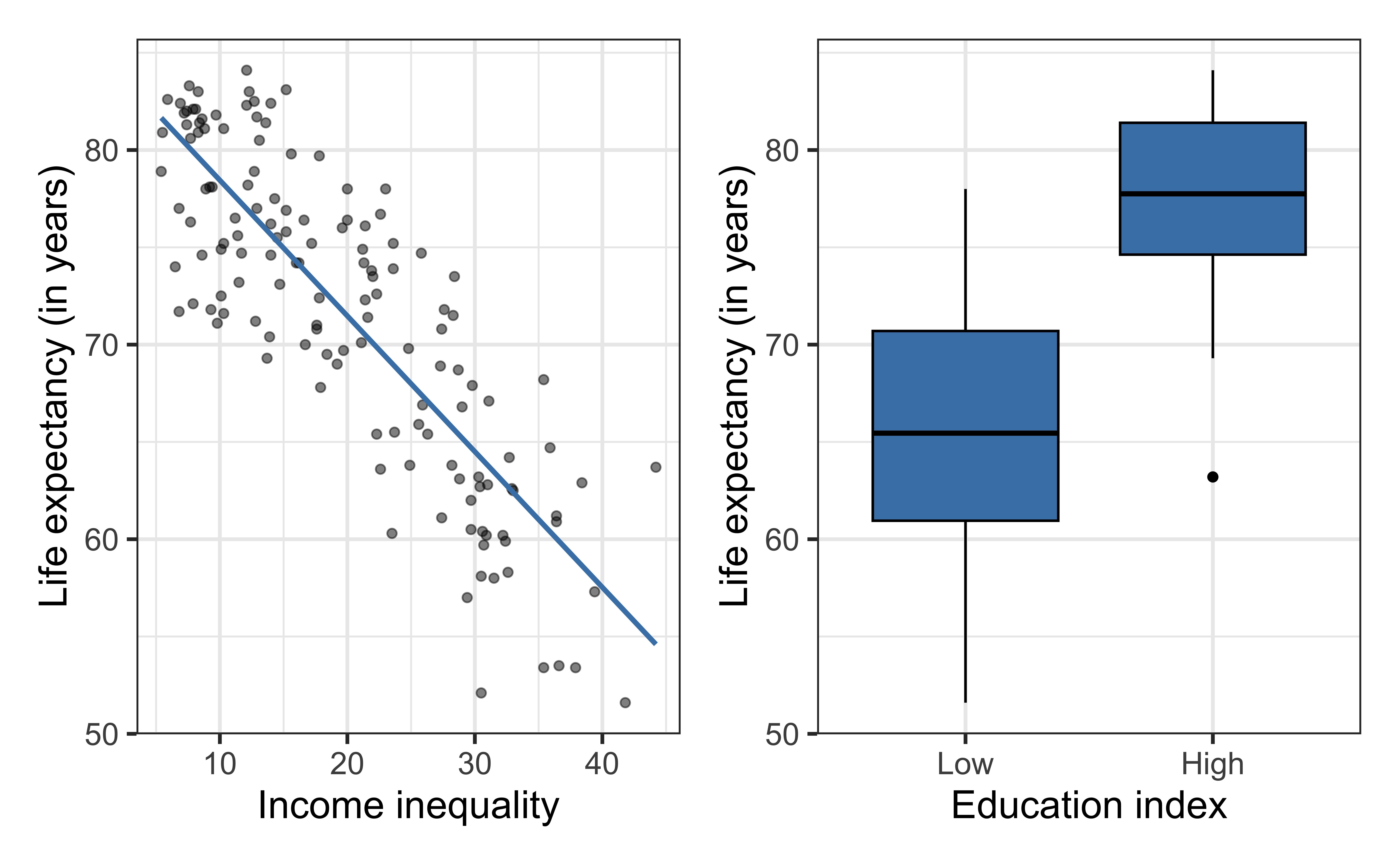
We can use exploratory data analysis to describe the relationship between two variables
We make an assumption about the relationship between variables when doing linear regression
The two main objectives for fitting a linear regression model are (1) prediction and (2) inference
Bring fully-charged laptop or device with keyboard for in-class application exercise (AE)