Welcome to STA 210!
Jan 09, 2025
Welcome!
Meet Prof. Tackett!
- Education and career journey
- BS in Math and MS in Statistics from University of Tennessee
- Statistician at Capital One
- PhD in Statistics from University of Virginia
- Assistant Professor of the Practice, Department of Statistical Science at Duke
- Work focuses on statistics education, curriculum design, and sense of belonging in introductory math and statistics classes
- Co-leader of the Bass Connections team Mental Health and the Justice System in Durham County
- Mom of 2-year-old twins 🙂
Meet the Teaching Assistants (TAs)!
Sylvia Vincent (PhD): Head TA + Lab leader
Ishrit Gupta (UG): Lab 02 helper
Kareena Legare (UG): Lab 01 helper
Check-in on Ed Discussion!
Click on the link or scan the QR code to answer the Ed Discussion poll
https://edstem.org/us/courses/70992/discussion/5951332

Topics
Introduction to the course
Syllabus activity
Data exploration (time permitting)
Regression Analysis
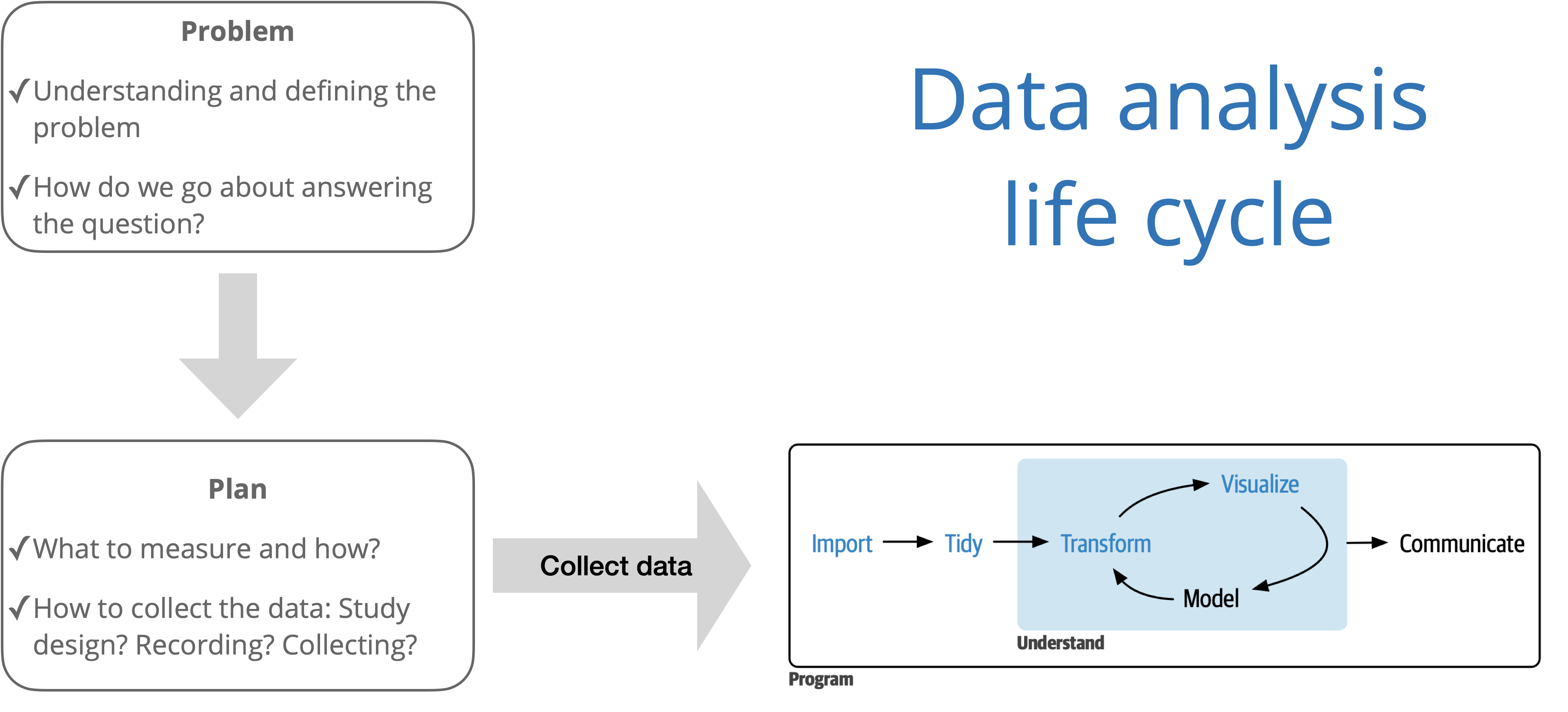
Source: R for Data Science with additions from The Art of Statistics: How to Learn from Data.
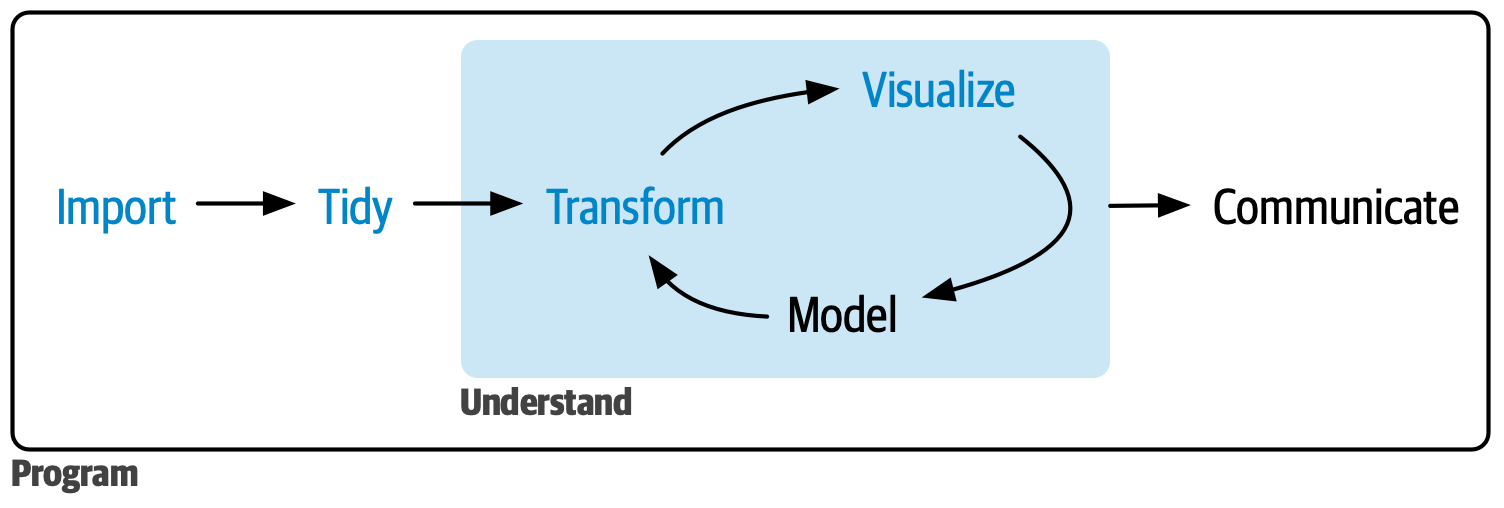
Source:R for Data Science
What is regression analysis?
Regression analysis is a statistical method used to examine the relationship between a response variable and one or more predictor variables. It is used for predicting future values, understanding relationships between variables, and identifying key predictors. It also helps in modeling trends, assessing the impact of changes, and detecting outliers in data.
Source: ChatGPT (with modification)
Regression in practice

Regression in practice
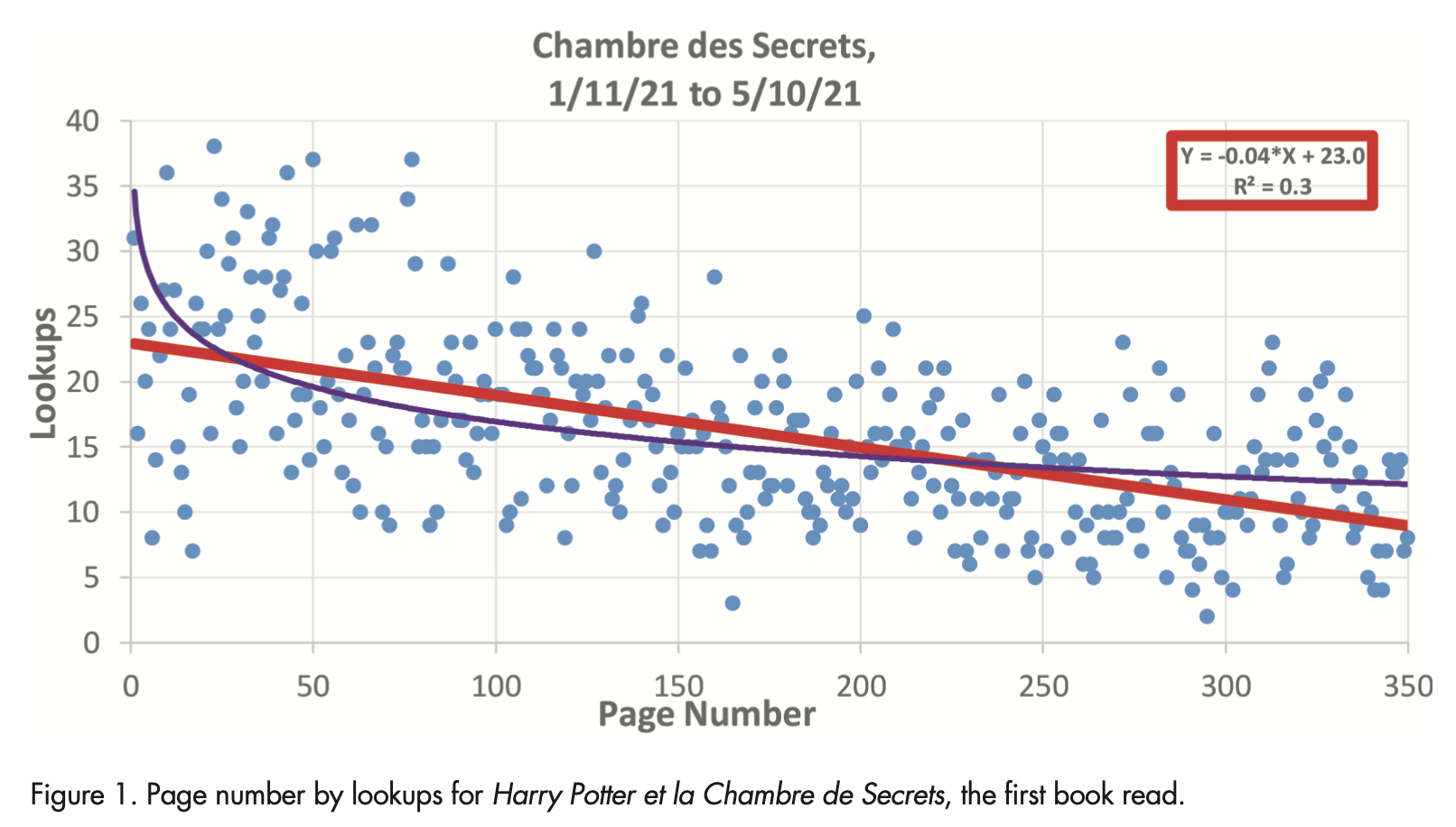
\[ \text{Lookups} = 23.0 - 0.04 \times \text{Page Number} \]
STA 210
What is STA 210?
Learn how to use linear and and logistic regression models to analyze multivariable relationships and answer questions about real-world phenomena using a data-driven approach.
This course emphasizes application over mathematical theory.
Pre-requisites
100-level Statistical Science course or Statistical Science 230, 231, or 240L
Note
If you are interested in the theoretical aspects of regression and/or becoming a statistics major, STA 221 - Regression Analysis: Theory and Applications may be a better fit. Come talk with me after class!
Course learning objectives
By the end of the semester, you will be able to…
analyze real-world data to answer questions about multivariable relationships.
use R to fit and evaluate linear and logistic regression models.
assess whether a proposed model is appropriate and describe its limitations.
implement a reproducible analysis workflow using R for analysis, Quarto to write reports and GitHub for version control and collaboration.
effectively communicate statistical results to a general audience.
assess the ethical considerations and implications of analysis decisions.
Course topics
Linear regression
- Coefficient estimation and interpretation
- Prediction
- Inference
- Model assessment
- Model assumptions and diagnostics
- Different types of predictors
- Model comparison + cross validation
Logistic regression
- Coefficient estimation and interpretation
- Prediction
- Model assessment
- Inference
- Multinomial logistic regression
General topics
- Computing using R and GitHub
- Presenting statistical results
- Collaboration and teamwork
Course overview
Course toolkit
- Website: https://sta210-sp25.netlify.app
- Central hub for the course!
- Tour of the website
- Canvas: https://canvas.duke.edu/courses/47067
- Office hours
- Gradebook
- Announcements
- Gradescope
- Ed Discussion
- GitHub: https://github.com/sta210-sp25
- Distribute assignments
- Platform for version control and collaboration
Computing toolkit

All analyses using R, a statistical programming language
Write reproducible reports in Quarto
Access RStudio through STA 210 Docker Containers

Access assignments
Facilitates version control and collaboration
All work in STA 210 course organization
Classroom community
It is my intent that students from all diverse backgrounds and perspectives be well-served by this course, that students’ learning needs be addressed both in and out of class, and that the diversity that the students bring to this class be viewed as a resource, strength and benefit.
If you have a name that differs from those that appear in your official Duke records, please let me know.
Please let me know your preferred pronouns, if you are comfortable sharing.
If you feel like your performance in the class is being impacted by your experiences outside of class, please don’t hesitate to come and talk with me. If you prefer to speak with someone outside of the course, your advisers and deans are excellent resources.
I (like many people) am still in the process of learning about diverse perspectives and identities. If something was said or done in class (by anyone) that made you feel uncomfortable, please talk to me about it.
Accessibility
The Student Disability Access Office (SDAO) is available to ensure that students are able to engage with their courses and related assignments.
If you have documented accommodations from SDAO, please send the documentation as soon as possible.
I am committed to making all course activities and materials accessible. If any course component is not accessible to you in any way, please don’t hesitate to let me know.
Syllabus activity
- Introduce yourself to your group members.
- Choose a reporter. This person will share the group’s summary with the class.
- Read the portion of the syllabus assigned to your group.
- Discuss the key points and questions you my have.
- The reporter will share a summary with the class.
Syllabus activity assignments
Group 1: What to expect in the course
Group 2: Homework and lab assignments
Group 3: Exams Project, Participation
Group 4: Academic honesty (except AI policy)
Group 5: Artificial intelligence policy
Group 6:Late work policy and waiver for extenuating circumstances
Group 8: Getting help in the course
Syllabus activity report out
Group 1: What to expect in the course
Group 2: Homework and lab assignments
Group 3: Exams Project, Participation
Group 4: Academic honesty (except AI policy)
Group 5: Artificial intelligence policy
Group 6:Late work policy and waiver for extenuating circumstances
Group 8: Getting help in the course
Grading
| Category | Percentage |
|---|---|
| Homework | 30% |
| Final project | 15% |
| Labs | 10% |
| Exam 01 | 20% |
| Exam 02 | 20% |
| Participation (AEs + Teamwork) | 5% |
| Total | 100% |
Five tips for success in STA 210
Complete all the preparation work before class.
Ask questions in class, office hours, and on Ed Discussion.
Do the homework and labs; get started on homework early when possible.
Don’t procrastinate and don’t let a week pass by with lingering questions.
Stay up-to-date on announcements on Ed Discussion and sent via email.
Questions?
Let’s look at data!
Before next class
Review syllabus
Labs start on Monday, January 13
Office hours start on Monday, January 13